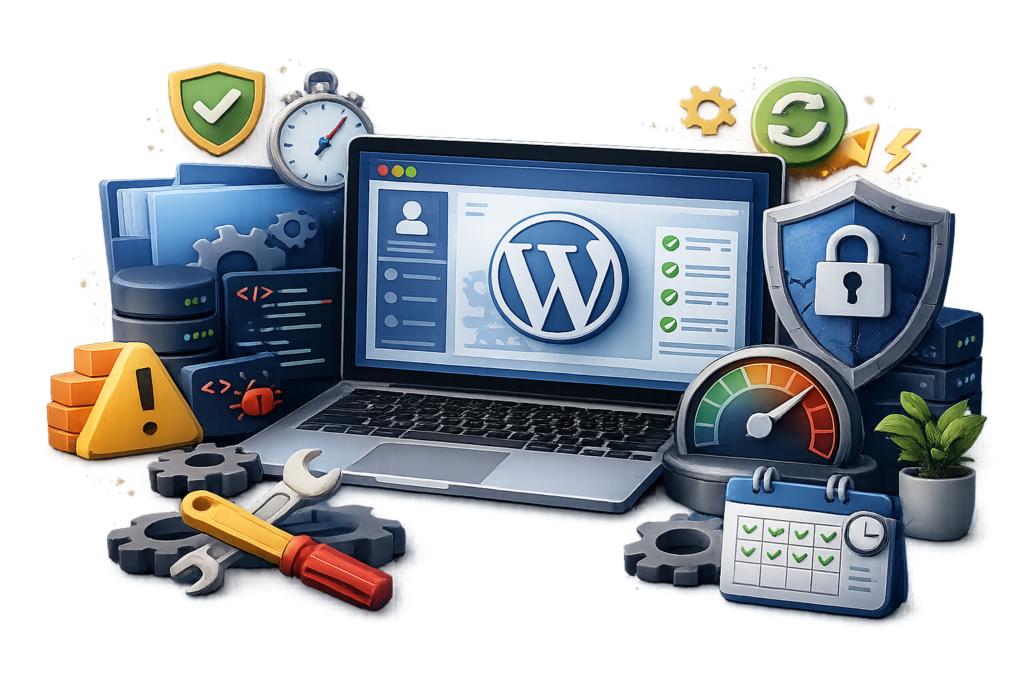
Discover the complete guide to WordPress Maintenance, including security updates, backups, performance optimization, plugin management, website monitoring, and best practices to keep your WordPress site secure, fast, and reliable.
Introduction
A WordPress website is never truly finished. Launching a site is only the beginning of a continuous process that involves updates, security monitoring, backups, performance improvements, and technical upkeep. Without regular WordPress Maintenance, even the most professionally designed website can become slow, vulnerable, and unreliable over time.
Businesses, bloggers, eCommerce stores, and organizations depend on their websites to generate leads, build trust, and provide information. When maintenance is ignored, visitors may experience broken pages, security warnings, slow loading speeds, or complete website outages. These issues not only frustrate users but can also negatively impact search rankings and conversion rates.
At WP Maintenance Service, we understand that maintaining a website requires more than occasional updates. Effective WordPress Maintenance combines technical expertise, proactive monitoring, and strategic optimization to ensure a website remains secure, efficient, and ready for future growth. This guide explores every major aspect of maintaining a WordPress website and explains why ongoing maintenance is essential for long-term success.
Understanding WordPress Maintenance
WordPress Maintenance refers to the ongoing process of monitoring, updating, securing, optimizing, and improving a WordPress website after it has been launched. Unlike static websites of the past, modern WordPress sites rely on themes, plugins, databases, hosting environments, and third-party integrations that require continuous attention.
Maintenance activities include updating WordPress core files, managing plugins, optimizing databases, monitoring uptime, reviewing security logs, testing backups, and improving website performance. Each of these tasks plays a crucial role in ensuring the website operates smoothly and remains protected from evolving threats.
A common misconception is that websites only need maintenance when something breaks. In reality, proactive maintenance helps prevent issues before they occur. Businesses that invest in routine website care often experience better performance, stronger security, improved user satisfaction, and reduced downtime. WordPress Maintenance should be viewed as a strategic investment rather than a reactive expense.
Why WordPress Maintenance Is Essential for Business Growth
A website serves as a digital storefront, customer support center, marketing platform, and lead generation tool. Any disruption can affect revenue, reputation, and customer trust. Regular maintenance ensures these critical functions continue operating without interruption.
Search engines prioritize websites that offer excellent user experiences. Fast page loading speeds, secure connections, mobile responsiveness, and error-free navigation contribute to stronger search visibility. Google’s official guidance on Core Web Vitals emphasizes the importance of user experience metrics in evaluating website quality. Regular maintenance helps maintain these standards by identifying and resolving performance bottlenecks.
Beyond technical considerations, maintenance contributes directly to business growth. A secure and optimized website supports higher conversion rates, improves customer confidence, and enables businesses to scale their online operations effectively. As competition increases across industries, maintaining a reliable digital presence becomes a significant competitive advantage.
Keeping WordPress Core Updated
The WordPress core software powers millions of websites worldwide. Developers continuously release updates to improve functionality, fix bugs, and address security vulnerabilities. Failing to update the core software can expose websites to known security risks that attackers actively exploit.
Each WordPress update may contain security patches, performance enhancements, compatibility improvements, and new features. Website owners who postpone updates often discover compatibility problems later because outdated software struggles to work with modern plugins and hosting environments. Routine updates help maintain stability while reducing potential conflicts.
Before installing updates, websites should be backed up thoroughly. Updates should also be tested whenever possible, particularly on business-critical websites. A structured update process minimizes risks while ensuring websites remain aligned with current security and performance standards. Consistent core updates form the foundation of every successful WordPress Maintenance strategy.
Plugin Management and Ongoing Optimization
Plugins extend WordPress functionality, enabling features such as contact forms, SEO optimization, security protection, analytics, and eCommerce capabilities. However, unmanaged plugins are among the most common sources of website vulnerabilities and performance issues.
Every installed plugin introduces additional code into the website environment. Poorly maintained plugins may contain security weaknesses, compatibility issues, or inefficient processes that slow website performance. Routine plugin audits help identify outdated, redundant, or unnecessary plugins that should be removed or replaced.
Effective plugin management involves updating plugins regularly, reviewing developer support activity, evaluating performance impact, and verifying compatibility with the latest WordPress version. Website administrators should prioritize high-quality plugins from reputable developers and avoid installing excessive plugins that duplicate functionality. Careful plugin management improves security, speed, and long-term website stability.
Theme Maintenance and Design Stability
A WordPress theme controls the appearance, layout, and user experience of a website. While themes are often selected during website development, they require ongoing maintenance to remain secure and compatible with evolving WordPress technologies.
Theme developers frequently release updates that address security concerns, improve functionality, and support newer WordPress features. Ignoring these updates may create compatibility issues that affect design elements, navigation systems, or mobile responsiveness. Regular theme updates help preserve visual consistency while maintaining website functionality.
Custom themes require additional attention because modifications can be affected during updates. Using child themes and maintaining documentation for customizations can help protect design changes during maintenance activities. By actively managing theme updates and testing visual elements, website owners ensure visitors continue receiving a professional and seamless browsing experience.
Website Security Monitoring and Protection
Cybersecurity threats continue to evolve, making website security one of the most critical aspects of WordPress Maintenance. Hackers often target outdated software, weak passwords, vulnerable plugins, and poorly configured websites to gain unauthorized access.
A comprehensive security strategy includes malware scanning, firewall implementation, login protection, file integrity monitoring, and security auditing. Regular reviews help identify suspicious activity before it develops into a major security incident. Proactive monitoring can significantly reduce the likelihood of successful attacks.
Google’s guidance on HTTPS and website security highlights the importance of secure browsing experiences. Security maintenance should also include SSL certificate monitoring, user access management, and vulnerability assessments. By implementing multiple layers of protection, businesses can strengthen their defenses and protect valuable website data.
The Importance of Regular Website Backups
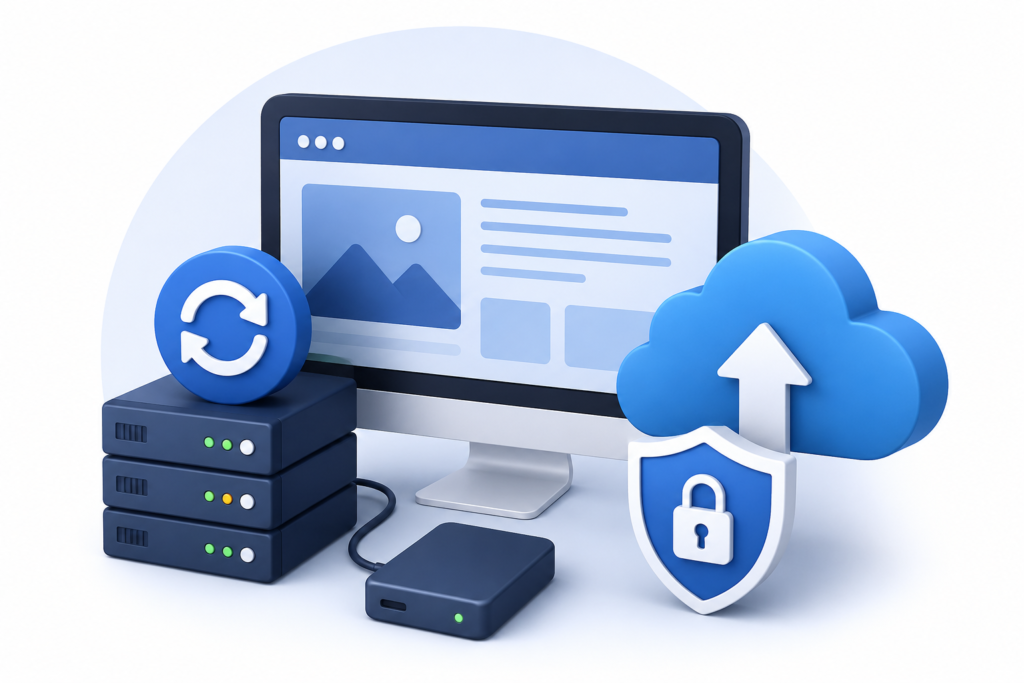
Backups provide a safety net when unexpected problems occur. Security breaches, hosting failures, accidental deletions, software conflicts, and human errors can all result in data loss. Without reliable backups, recovering a website can become extremely difficult and costly.
A strong backup strategy includes automated scheduling, off-site storage, backup verification, and restoration testing. Storing backups in multiple locations helps ensure availability even if one storage environment becomes compromised. Backup frequency should align with website activity levels, particularly for content-heavy or eCommerce websites.
Many website owners assume backups are working without verifying them. Unfortunately, corrupted or incomplete backups often become apparent only during emergencies. Routine restoration testing confirms that backups can be successfully deployed when needed. Reliable backup systems are among the most valuable investments in WordPress Maintenance because they provide business continuity and disaster recovery capabilities.
Performance Optimization and Website Speed Improvements
Website speed directly influences user experience, search visibility, and conversion rates. Visitors expect pages to load quickly, and delays often result in increased bounce rates and reduced engagement. Performance optimization is therefore a central component of WordPress Maintenance.
Several factors affect website speed, including hosting quality, image optimization, caching configuration, plugin efficiency, database health, and content delivery networks. Regular performance audits help identify bottlenecks that slow page loading times. Improvements in these areas can significantly enhance user satisfaction and website effectiveness.
Google’s recommendations for PageSpeed Insights and website performance provide valuable benchmarks for optimization efforts. Maintenance activities should include image compression, cache management, code optimization, script reduction, and performance monitoring. Consistent speed optimization ensures websites remain competitive in increasingly demanding digital environments.
Database Optimization and Cleanup
The WordPress database stores posts, pages, settings, user information, comments, and plugin data. Over time, databases accumulate unnecessary information such as post revisions, spam comments, temporary records, and orphaned metadata. This clutter can reduce performance and increase resource consumption.
Routine database optimization removes unnecessary data while improving efficiency. Maintenance tasks may include cleaning revisions, optimizing tables, deleting expired transients, and reviewing plugin-generated database entries. A well-maintained database contributes to faster page loading speeds and improved server performance.
Database health also influences website scalability. As traffic and content volumes increase, inefficient databases can become major performance bottlenecks. Regular optimization helps maintain responsiveness while supporting future growth. Businesses that prioritize database maintenance often experience smoother website operations and reduced hosting resource usage.
Uptime Monitoring and Proactive Error Detection
Website availability is one of the most important indicators of digital reliability. When a website goes offline, visitors cannot access products, services, information, or contact forms. Every minute of downtime can lead to lost opportunities, reduced customer trust, and potential revenue loss. WordPress Maintenance should always include continuous uptime monitoring to ensure problems are identified and resolved quickly.
Modern monitoring systems can detect outages, slow response times, SSL certificate issues, DNS failures, and server errors. Rather than waiting for customers to report problems, proactive monitoring alerts administrators immediately when unusual activity occurs. This rapid response capability minimizes downtime and helps maintain a consistent user experience.
Error detection extends beyond uptime monitoring. Website administrators should regularly review logs, identify PHP errors, investigate failed processes, and test key functionality such as forms, checkout pages, and search features. A proactive monitoring strategy helps organizations identify hidden issues before they become major disruptions.
Broken Link Management and Website Integrity
Broken links create a poor user experience and can negatively affect website credibility. Visitors who encounter error pages may lose confidence in a website’s reliability and professionalism. From an SEO perspective, broken links can also interfere with crawling efficiency and content discovery.
As websites grow, links naturally become outdated. Pages may be deleted, URLs may change, or external resources may no longer exist. Regular WordPress Maintenance includes scanning for broken internal and external links and implementing appropriate fixes. Redirects should be configured when content is moved, ensuring visitors and search engines can still access relevant information.
Maintaining website integrity requires ongoing attention to navigation structures, menu systems, category pages, and resource links. A well-maintained linking structure improves user journeys, enhances content discoverability, and supports stronger search engine performance. Regular audits help ensure every link contributes positively to the overall website experience.
SEO Maintenance and Search Visibility
Search engine optimization is not a one-time task. Algorithms evolve, competitors publish new content, and technical requirements change over time. Effective WordPress Maintenance includes ongoing SEO monitoring and improvements to preserve and enhance search visibility.
Technical SEO maintenance involves reviewing crawlability, indexing status, XML sitemaps, structured data, canonical tags, mobile usability, and page speed performance. Website administrators should also monitor search performance metrics and identify opportunities for optimization. Google’s official guidance on Search Essentials provides valuable recommendations for maintaining a search-friendly website.
Content maintenance is equally important. Existing articles should be reviewed periodically to ensure information remains accurate, relevant, and comprehensive. Updating outdated content, improving keyword targeting, and enhancing user experience can significantly improve search performance. Consistent SEO maintenance helps websites remain competitive in evolving search landscapes.
User Access Management and Administrative Security
Many WordPress websites involve multiple users, including administrators, editors, authors, developers, and support personnel. Without proper user management, unnecessary access privileges can increase security risks and create operational challenges.
A core principle of website security is providing users with only the permissions required for their responsibilities. Administrative accounts should be limited to trusted individuals, while editors and contributors should receive role-specific access. This approach reduces the likelihood of accidental changes and unauthorized actions.
Routine maintenance should include reviewing user accounts, removing inactive users, updating passwords, enabling multi-factor authentication, and auditing permission levels. Security incidents often originate from compromised credentials rather than software vulnerabilities. Strong user management practices strengthen overall website security while supporting efficient collaboration among team members.
Mobile Experience and Cross-Device Compatibility
Mobile traffic continues to dominate internet usage across many industries. A website that performs well on desktop devices but struggles on smartphones can lose significant traffic, engagement, and conversion opportunities. WordPress Maintenance should include ongoing testing across multiple devices and screen sizes.
Responsive design requires more than flexible layouts. Images, navigation menus, forms, interactive elements, and loading speeds must all function effectively on mobile devices. Regular testing helps identify usability challenges that may not be immediately visible during desktop reviews.
Cross-device compatibility extends beyond smartphones. Websites should perform consistently on tablets, laptops, and various browsers. Maintenance activities should include compatibility testing after major updates to ensure a consistent experience for all users. A seamless mobile experience supports better engagement, stronger customer satisfaction, and improved search performance.
Scalability and Preparing for Future Growth
A website that performs well today may struggle as traffic, content, and functionality requirements increase. Scalability planning is an essential component of WordPress Maintenance because growth often introduces new technical challenges.
Scalable websites are designed to handle increased traffic without sacrificing performance. Maintenance activities may involve evaluating hosting resources, optimizing databases, implementing caching solutions, and preparing infrastructure for future demands. These improvements ensure websites remain responsive during periods of rapid growth.
Future growth may also require new integrations, advanced functionality, multilingual capabilities, or expanded content libraries. Proactive planning helps organizations adapt efficiently while avoiding costly emergency upgrades. Businesses that incorporate scalability into their maintenance strategy are better positioned to support long-term digital success.
Common WordPress Maintenance Mistakes
Many website owners unintentionally create problems by overlooking essential maintenance responsibilities. Understanding these common mistakes can help organizations avoid unnecessary risks and expenses.
One of the most frequent mistakes is delaying updates. Website owners sometimes postpone updates out of concern for compatibility issues. While testing is important, ignoring updates entirely often creates greater security risks. Outdated software remains one of the leading causes of website vulnerabilities.
Another common mistake involves relying solely on hosting backups without maintaining independent backup systems. Organizations may also neglect performance monitoring, install excessive plugins, ignore security warnings, or fail to review user permissions regularly. Each of these oversights can contribute to performance degradation, security incidents, or website downtime.
Perhaps the most significant mistake is treating maintenance as an occasional activity rather than an ongoing process. Effective WordPress Maintenance requires consistency, documentation, monitoring, and continuous improvement. Organizations that adopt a proactive approach typically experience fewer problems and better long-term results.
Building a Long-Term WordPress Maintenance Strategy
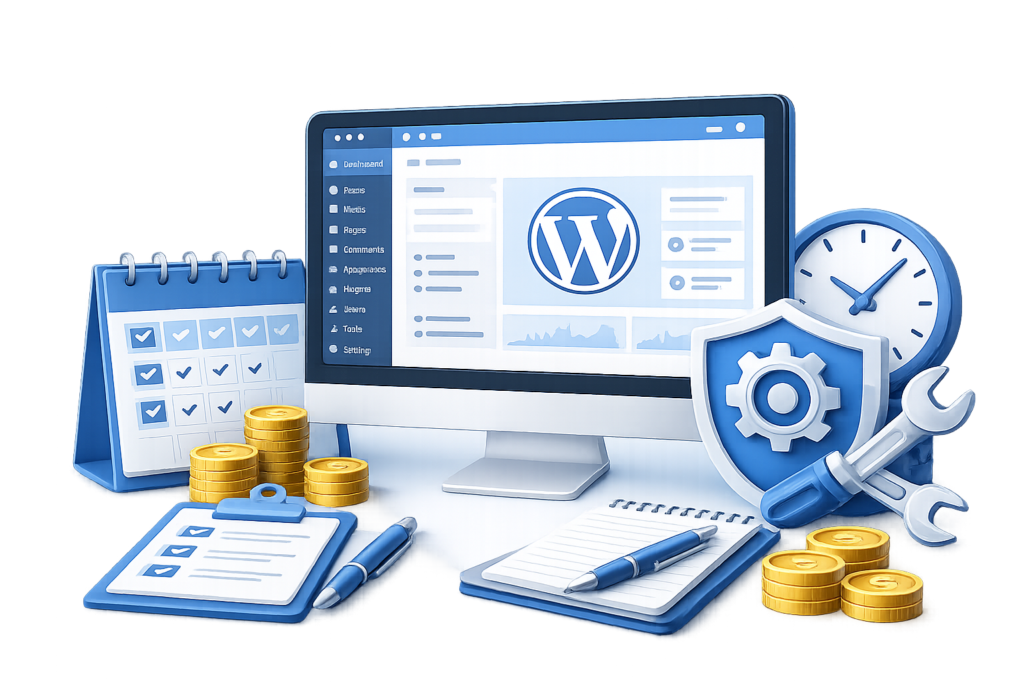
Successful website maintenance requires structure, planning, and accountability. Rather than responding to issues as they arise, organizations should establish a comprehensive maintenance framework that addresses security, performance, backups, updates, monitoring, and optimization.
A maintenance strategy should define responsibilities, schedules, procedures, and performance benchmarks. Weekly, monthly, and quarterly maintenance activities should be documented and reviewed regularly. This systematic approach ensures critical tasks are completed consistently and important issues are not overlooked.
Organizations should also prioritize continuous learning and adaptation. WordPress, hosting technologies, cybersecurity threats, and search engine requirements evolve constantly. Staying informed about industry developments helps ensure maintenance practices remain effective. A well-defined strategy transforms website maintenance from a reactive necessity into a proactive business advantage.
Best Practices Summary
Successful WordPress Maintenance is built on consistency, proactive monitoring, and strategic planning. The following best practices can help website owners maintain a secure, fast, and reliable online presence:
- Update WordPress core regularly.
- Keep themes and plugins current.
- Remove unused plugins and themes.
- Perform automated and manual backups.
- Test backup restoration procedures.
- Monitor uptime continuously.
- Implement strong security controls.
- Review user permissions frequently.
- Optimize website speed and performance.
- Clean and optimize databases regularly.
- Monitor SEO health and technical issues.
- Check for broken links and redirect errors.
- Maintain SSL certificates and HTTPS security.
- Test mobile responsiveness after updates.
- Plan infrastructure upgrades for future growth.
Organizations that follow these practices are better equipped to maintain strong performance, security, and user satisfaction over the long term.
Frequently Asked Questions
1. What is WordPress Maintenance?
WordPress Maintenance is the ongoing process of updating, monitoring, securing, optimizing, and managing a WordPress website to ensure it remains functional, secure, and high-performing.
2. How often should a WordPress website be maintained?
Basic maintenance tasks should be performed weekly, while comprehensive reviews should occur monthly. Security monitoring and uptime tracking should ideally run continuously.
3. Why are WordPress updates important?
Updates provide security patches, bug fixes, compatibility improvements, and performance enhancements. Delaying updates increases the risk of vulnerabilities and technical issues.
4. What happens if I do not maintain my WordPress website?
Neglected websites may experience security breaches, slow performance, broken functionality, search ranking declines, and increased downtime.
5. How often should website backups be created?
Backup frequency depends on website activity. High-traffic or frequently updated websites may require daily or real-time backups, while smaller websites may use weekly schedules.
6. Does WordPress Maintenance improve SEO?
Yes. Maintenance supports SEO through performance optimization, technical issue resolution, mobile usability improvements, security enhancements, and content updates.
7. Can maintenance prevent website hacking?
No security strategy can guarantee complete protection, but regular maintenance significantly reduces risk by addressing vulnerabilities, monitoring threats, and strengthening defenses.
8. Is WordPress Maintenance necessary for small websites?
Absolutely. Even small websites are targeted by automated attacks and can suffer from outdated software, broken functionality, or performance problems. Maintenance benefits websites of all sizes.
Conclusion
WordPress Maintenance is not simply a technical task—it is a critical business function that supports security, performance, reliability, and growth. Every aspect of a website, from software updates and backups to SEO optimization and security monitoring, contributes to the overall health of the digital experience.
Organizations that invest in consistent maintenance reduce risk, improve user satisfaction, strengthen search visibility, and create a more stable foundation for future growth. Ignoring maintenance may save time in the short term, but it often leads to greater costs, disruptions, and challenges later.
At WP Maintenance Service, we recognize that every website represents an important business asset. A proactive maintenance strategy ensures that asset continues delivering value, supporting customers, and driving long-term success in an increasingly competitive digital environment.
Want to Implement This Easily?
Prompt Text:
You are an expert consultant. Based on the blog post titled “WordPress Maintenance”, provide a step-by-step, practical implementation guide. Include tools, best practices, common mistakes to avoid, and advanced tips. Assume the reader wants to implement everything discussed in this article effectively.
Call to Action:
Want our help implementing this? Just reach out to us via our website contact form: