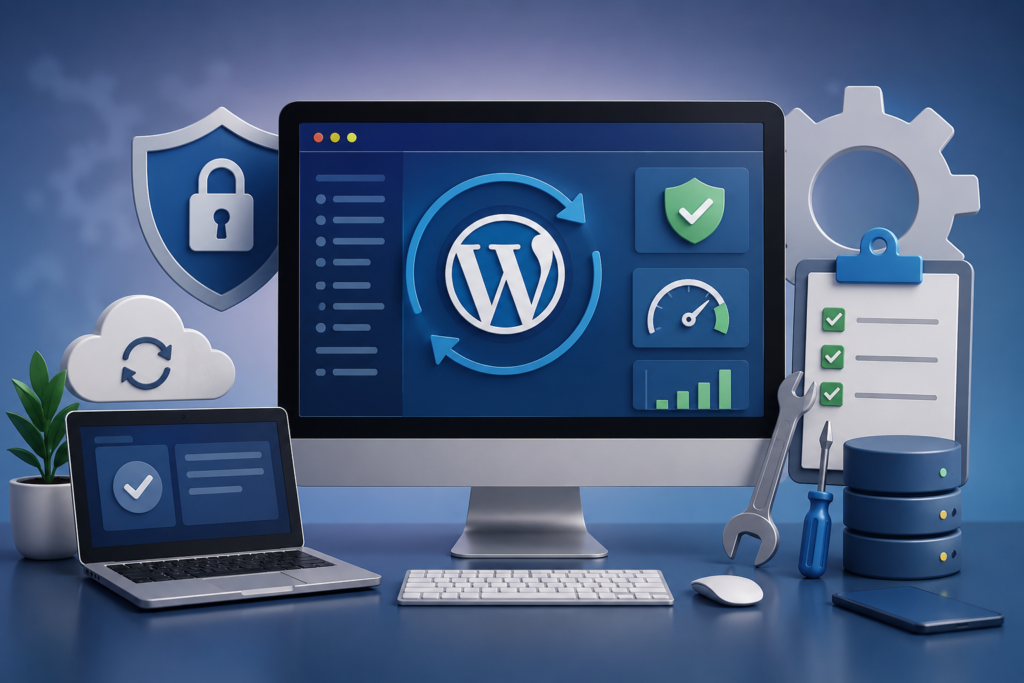
Learn how professional WordPress maintenance keeps websites secure, fast, updated, reliable, SEO-friendly, and ready for long-term growth through proactive updates, backups, security checks, performance optimisation, and technical monitoring.
Introduction
WordPress is one of the most widely used website platforms because it provides businesses, publishers, organisations, and entrepreneurs with a flexible foundation for building modern websites. However, launching a WordPress website is only the beginning. A website that performs well today can develop security vulnerabilities, compatibility problems, database issues, broken functionality, performance bottlenecks, or search visibility problems if it is not maintained consistently. Effective WordPress maintenance is therefore an ongoing process rather than a one-time technical task.
For website owners, maintenance involves much more than simply clicking the update button whenever a new WordPress version appears. A reliable maintenance strategy includes WordPress core updates, plugin and theme management, security monitoring, backups, database health, performance optimisation, error detection, uptime monitoring, SEO checks, and recovery planning. These activities work together to protect the website while preserving its functionality and user experience. The official WordPress security guidance recommends keeping WordPress and its components updated while treating security as an ongoing process rather than a single event.
For businesses using WordPress as an important digital channel, proactive maintenance can also support technical SEO and website quality. Google’s Google Search Essentials provides guidance around technical requirements, spam policies, and key practices that help websites become eligible for search visibility. A well-maintained website is easier to monitor, troubleshoot, secure, and improve. This complete guide explains the essential components of WordPress maintenance and shows how website owners can create a structured approach for long-term reliability.
What Is WordPress Maintenance and Why Does It Matter?
WordPress maintenance is the ongoing process of monitoring, updating, securing, testing, optimising, and improving a WordPress website. It covers the technical components that allow a website to operate correctly, including the WordPress core, plugins, themes, database, hosting environment, files, integrations, forms, media, and security controls. Unlike a single website repair, maintenance focuses on preventing avoidable problems before they become serious incidents. A proactive approach can identify outdated software, failed backups, broken links, performance issues, suspicious activity, and compatibility conflicts while they are still manageable. This makes maintenance an important part of responsible website ownership rather than an optional technical activity.
One of the biggest misconceptions about maintenance is that it means performing updates whenever WordPress displays a notification. Updates are certainly important, but maintenance requires a broader workflow. Before making changes, website owners should understand what is being updated, confirm that a usable backup exists, assess compatibility, and ideally test important changes before applying them to a production environment. The official Upgrading WordPress documentation recommends backing up before upgrading and ensuring that backups are usable. This illustrates why maintenance should combine prevention, verification, monitoring, and recovery, rather than treating updates as isolated clicks.
The importance of maintenance becomes even clearer when WordPress is used for business-critical functions such as lead generation, ecommerce, publishing, bookings, membership, customer support, or online payments. A small technical problem can have commercial consequences if visitors cannot complete forms, products fail to load, pages become extremely slow, or search engines encounter technical barriers. Regular maintenance helps create a controlled environment where changes can be reviewed and problems can be detected earlier. The goal is not to guarantee that a website will never experience an issue—no maintenance process can provide that guarantee—but to reduce unnecessary risk, improve resilience, and make recovery faster when something does go wrong.
Why Regular WordPress Maintenance Is Essential for Business Websites
Regular maintenance helps protect the investment a business has already made in its website. A WordPress website typically depends on multiple layers of software: the WordPress core, plugins, themes, PHP, database systems, hosting infrastructure, caching technologies, security mechanisms, and third-party integrations. These components do not remain static. Developers release updates to introduce features, fix bugs, address security weaknesses, improve compatibility, and support newer technologies. If a website is left untouched for extended periods, the gap between its software environment and current technology can become increasingly difficult to manage. Proactive maintenance keeps these moving parts under controlled observation.
Security is one of the strongest reasons for adopting a structured maintenance routine. WordPress itself is actively maintained, but website security also depends on the quality and configuration of plugins, themes, passwords, user permissions, hosting, backups, and other technologies surrounding the core platform. The official Hardening WordPress guidance explains that hardening is about reducing risk rather than eliminating every possible threat. Practical measures include keeping software current, using strong authentication, maintaining backups, limiting unnecessary components, and monitoring the environment. Regular maintenance gives website owners an opportunity to verify that these controls remain effective.
Performance and user experience provide another important reason to maintain a website consistently. Websites accumulate database records, media files, plugin settings, revisions, logs, third-party scripts, and other technical elements over time. Poorly managed resources can contribute to slower pages and more complicated troubleshooting. Performance problems can affect users directly and may also influence how effectively search engines understand and evaluate a website’s technical experience. Google’s developer guidance recommends building websites that are secure, fast, accessible, and functional across devices. Google’s developer SEO guide provides useful direction for developers working toward these objectives.
WordPress Core Updates: Keeping the Foundation Current
The WordPress core provides the underlying platform on which themes, plugins, content, and many website functions operate. Keeping this foundation current is therefore one of the most important maintenance responsibilities. Core releases can include security fixes, bug fixes, performance improvements, new capabilities, compatibility changes, and other technical improvements. Ignoring available updates indefinitely can increase technical debt and make future upgrades more difficult. However, responsible maintenance does not mean blindly updating every component without preparation. Website owners should consider backups, compatibility, custom code, staging environments, and the importance of the website’s functionality before applying significant changes.
A safe update workflow begins with preparation. A reliable backup should exist before a major change, and the backup should be stored separately enough that a failure affecting the website does not also destroy the recovery copy. Website owners should know how to restore that backup rather than simply assuming that a backup plugin’s success notification means recovery is guaranteed. The official WordPress upgrading documentation provides guidance on backing up, updating, and troubleshooting WordPress installations. For important business websites, testing changes on a staging environment can provide an additional layer of protection because problems can often be discovered before visitors encounter them.
Core maintenance should also account for custom development and legacy configurations. A website may contain custom functions, modified templates, third-party integrations, or code written specifically for an older WordPress environment. A core update can expose compatibility problems that were previously hidden. This does not mean updates should be avoided; instead, it means updates should be managed intelligently. Maintaining a record of custom code, installed components, integrations, and known dependencies makes troubleshooting significantly easier. A structured maintenance process treats each update as a controlled change and verifies important website functions afterward, including navigation, forms, login systems, ecommerce features, search functionality, media, and key conversion paths.
Plugin Maintenance: Updates, Compatibility, and Risk Management
Plugins are one of WordPress’s greatest strengths because they allow website owners to extend functionality without building every feature from scratch. Contact forms, SEO features, ecommerce functionality, caching, analytics, security, memberships, backups, and many other capabilities can be introduced through plugins. However, every additional plugin also creates another software dependency that needs to be maintained. Plugin maintenance therefore involves more than checking for available updates. It includes evaluating whether plugins remain necessary, compatible, supported, secure, efficiently configured, and appropriate for the website’s current requirements.
Before updating an important plugin, website owners should consider its role within the website and whether other components depend on it. A plugin update can sometimes change settings, interfaces, database behaviour, APIs, or compatibility with themes and other plugins. This is particularly important for websites using complex ecommerce, membership, multilingual, booking, or custom integrations. A sensible process involves taking a recent backup, reviewing the update, applying it in a controlled environment when appropriate, and testing the website after deployment. The objective is not to avoid updates but to reduce the risk associated with unmanaged change.
Unused plugins deserve particular attention. A plugin that is inactive may no longer contribute functionality, but it still represents unnecessary software within the website if it remains installed. WordPress’s official security guidance recommends keeping software updated and managing the website’s components carefully. Removing unnecessary plugins can simplify maintenance, reduce potential compatibility conflicts, and make the website easier to audit. Website owners should also review plugin sources carefully and avoid downloading software from questionable locations. A smaller, well-managed plugin stack is often easier to secure and troubleshoot than a website containing numerous overlapping or abandoned components.
WordPress Theme Maintenance and Customisation Management
Themes control significant portions of a WordPress website’s presentation and can also influence functionality. Theme maintenance therefore deserves the same level of attention given to plugins and the WordPress core. A theme may receive updates for security, compatibility, accessibility, performance, browser support, and new WordPress functionality. Allowing a theme to become outdated can eventually create compatibility problems or prevent the website from taking advantage of improvements introduced by newer versions of WordPress. Regular theme reviews help identify whether the current design framework remains technically appropriate.
Customisation creates an additional challenge. Directly modifying a parent theme’s files can cause custom changes to be overwritten when the theme is updated. For appropriate use cases, child themes or other structured customisation approaches can help separate custom code from the original theme. Before changing a theme, website owners should document important customisations, templates, CSS modifications, widgets, menus, and integrations. This documentation provides a valuable reference during future updates or redesigns. Testing is also essential because a seemingly minor theme update can affect page layouts, navigation, typography, responsive behaviour, or interactive components.
Theme maintenance should also include a broader review of design quality and user experience. A theme that was technically excellent several years ago may no longer provide the best performance or accessibility characteristics for the current website. Website owners should periodically examine mobile presentation, loading behaviour, navigation, readability, image handling, accessibility, and compatibility with current WordPress features. The objective should be long-term maintainability rather than endlessly patching an increasingly outdated design framework. A well-maintained theme should support the website’s content and functionality without introducing unnecessary technical complexity.
WordPress Backups: Building a Reliable Recovery Strategy
Backups are one of the most important components of a WordPress maintenance strategy because they provide a recovery option when an update fails, a website is compromised, data becomes corrupted, or an unexpected technical problem occurs. A backup should not be viewed simply as a file stored somewhere. A dependable backup strategy considers what is backed up, how frequently it is backed up, where copies are stored, how long they are retained, and whether restoration has actually been tested. Without a reliable recovery process, even a carefully maintained website can face significant downtime after a serious incident.
A complete WordPress backup generally needs to account for both website files and the database. Files may include themes, plugins, uploaded media, configuration files, and other components, while the database contains important content, settings, users, and other structured information. The exact backup architecture should reflect the website’s business requirements. A frequently updated ecommerce or membership website may require a different backup frequency from a relatively static brochure website. Backups should also be protected from the same failure that could affect the production website. Maintaining independent copies can improve resilience.
Testing restoration is the part that many website owners overlook. A backup that has never been restored is not necessarily a proven recovery mechanism. Files can become incomplete, credentials can be outdated, database restoration can fail, or the backup process may not capture everything required to rebuild the website. The WordPress security documentation emphasises the importance of recovery planning and backups as part of ongoing website security. WordPress Security A strong maintenance workflow therefore schedules periodic restoration tests and documents the recovery process so that the website owner knows exactly what to do during an emergency.
WordPress Security Maintenance: Reducing Preventable Risks
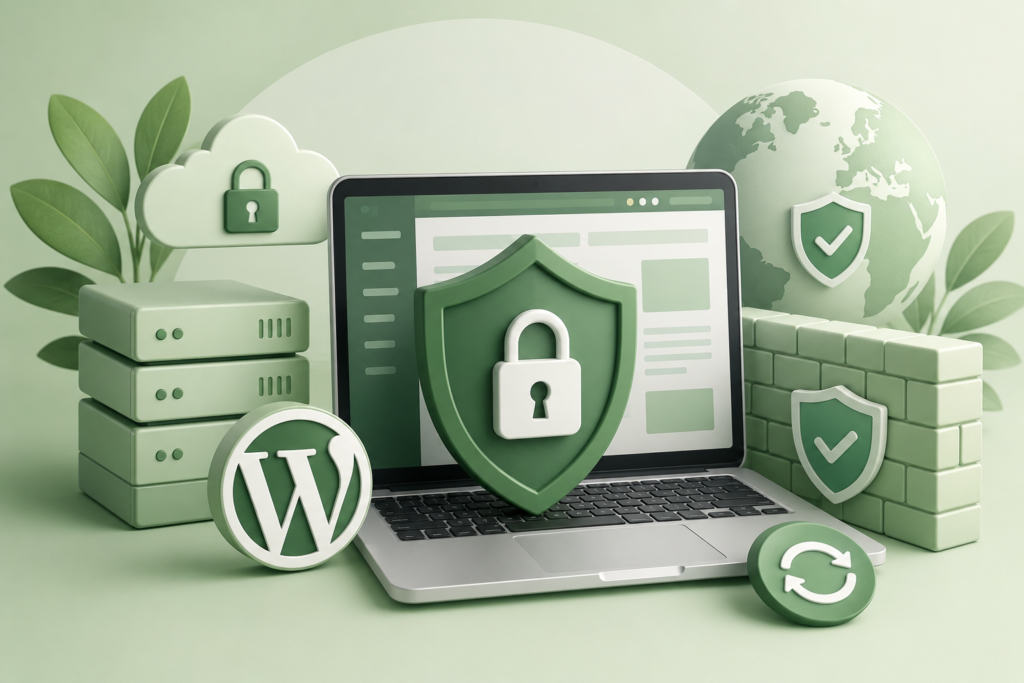
Security maintenance is an ongoing discipline that combines software updates, authentication controls, access management, monitoring, backups, configuration reviews, and incident preparation. WordPress security cannot be reduced to installing one security plugin and assuming that the website is protected permanently. Attack methods change, vulnerabilities are discovered, credentials can be exposed, and third-party components can introduce new risks. A responsible maintenance strategy therefore reviews the entire website environment rather than concentrating on one security feature.
User access should be reviewed regularly, especially on websites with multiple administrators, developers, editors, contractors, or external contributors. Accounts that are no longer required should not retain unnecessary privileges. Strong passwords and appropriate two-step authentication can provide additional protection for important accounts. The official WordPress hardening guidance recommends practical risk-reduction measures including strong authentication, current software, backups, and removing unnecessary components. Website owners should also consider hosting security, HTTPS, firewall or WAF capabilities, file permissions, monitoring, and secure administrative practices.
Error handling is another security consideration. Development environments may need detailed debugging information, but production websites should avoid exposing sensitive technical information through visible PHP errors or debugging output. WordPress’s official display errors guidance explains why exposing PHP errors publicly can reveal technical details that should remain private. Security maintenance should therefore include reviewing logging and debugging configurations, monitoring suspicious activity, checking unexpected administrative changes, and ensuring that recovery procedures are available. The goal is practical risk reduction: make common attacks harder, detect unusual behaviour earlier, and ensure the website can be recovered when prevention fails.
Database Maintenance and WordPress Website Health
The WordPress database stores much of the information that makes a website function, including posts, pages, settings, user data, metadata, plugin information, and other structured content. As websites evolve, databases can accumulate revisions, temporary data, expired records, plugin-generated information, and other entries that may no longer be necessary. Database maintenance aims to keep the underlying data environment organised and healthy without removing information that is still required. This requires care because aggressive database cleaning can cause data loss or unexpected functionality problems if important records are deleted.
A sensible database maintenance strategy begins with understanding what is actually present. Website owners should identify which plugins create substantial database activity, whether scheduled tasks are functioning correctly, whether unnecessary data is accumulating, and whether database errors are being recorded. Before performing significant cleanup, a reliable backup should exist. Database optimisation should never be treated as a routine exercise where everything that appears old is automatically deleted. Some historical records may be important for functionality, compliance, reporting, troubleshooting, or recovery. The safest approach is to make changes based on evidence and verify the website afterward.
Database health also connects directly with performance. Queries that take too long, inefficient plugin operations, excessive stored data, or poorly configured hosting resources can contribute to slower responses. However, database cleanup alone should not be presented as a universal speed solution. WordPress performance depends on several layers, including hosting, server configuration, caching, themes, plugins, images, third-party scripts, network conditions, and front-end code. Effective maintenance evaluates the complete environment before deciding what needs optimisation. This evidence-based approach prevents unnecessary database changes and focuses effort where measurable improvements are most likely.
WordPress Performance Maintenance and Website Speed
Website speed is an ongoing maintenance concern because performance can change even when the website owner has not intentionally changed the design. New plugins may introduce scripts, content may become heavier, images may increase in size, third-party services may slow down, and hosting resources may become insufficient as traffic grows. Performance maintenance therefore involves regular measurement rather than assuming that a website remains fast simply because it performed well after launch. Monitoring important pages over time can reveal gradual degradation before it becomes a major user-experience problem.
A useful performance workflow begins with measurement. Tools such as PageSpeed Insights can help website owners investigate performance opportunities and understand how pages behave under Google’s performance-related measurements. Performance testing should focus on important real-world pages rather than relying on one homepage score. Landing pages, product pages, service pages, blog articles, checkout pages, and other high-value URLs may have very different performance characteristics. A maintenance process should therefore identify the pages that matter most and monitor them consistently.
Optimisation should then be based on the actual bottleneck. Common areas include image compression and modern image formats, browser caching, server response time, unnecessary JavaScript, CSS delivery, third-party scripts, plugin overhead, database queries, and hosting resources. Not every website requires the same solution, and adding multiple optimisation plugins without understanding their interaction can sometimes create additional problems. Google’s developer documentation encourages websites to be secure, fast, accessible, and functional across devices. Google’s developer SEO documentation A disciplined performance maintenance process measures first, makes targeted improvements second, and validates the result afterward.
WordPress SEO Maintenance: Protecting Search Visibility
WordPress maintenance and search engine optimisation are closely connected because technical problems can affect how search engines crawl, render, index, and understand a website. SEO maintenance is not about repeatedly adding keywords to existing pages. Instead, it involves protecting the technical foundations that allow valuable content to remain accessible and discoverable. Website owners should periodically review indexability, crawlability, redirects, canonical signals, XML sitemaps, internal links, metadata, structured data, mobile usability, page performance, and unexpected changes to important URLs. Following the recommendations in Google Search Essentials provides a strong foundation for maintaining search-friendly websites.
Technical SEO checks should become part of the normal WordPress maintenance workflow. A website owner can use Google Search Console to monitor search performance, indexing information, and issues reported by Google. If important pages suddenly disappear from search results, receive unexpected indexing problems, or experience crawling difficulties, Search Console can provide useful evidence for investigation. Maintenance should also include checking whether website updates have accidentally changed URLs, removed important content, introduced noindex directives, damaged internal links, or altered canonical configurations. These problems can sometimes remain invisible to ordinary visitors while still affecting organic search performance.
SEO maintenance should also protect content quality. Google explains in its SEO Starter Guide that useful, unique, readable, up-to-date, people-first content helps users and search engines understand a website. A maintenance programme can therefore include reviewing outdated articles, improving unclear pages, consolidating genuinely overlapping content, fixing broken internal links, updating outdated references, and ensuring important pages continue to satisfy user intent. The objective is long-term search visibility supported by technical stability and genuinely useful information—not short-term manipulation. When technical maintenance and content quality are managed together, a WordPress website becomes easier to crawl, easier to use, and more resilient as search technology evolves.
WordPress Error Monitoring and Troubleshooting
Errors are an unavoidable possibility in any software environment, but effective maintenance can reduce their frequency and shorten the time required to diagnose them. WordPress websites can encounter plugin conflicts, PHP errors, database connection problems, HTTP errors, failed updates, broken themes, incorrect permissions, caching conflicts, JavaScript errors, API failures, and hosting-related issues. The key difference between reactive and proactive maintenance is visibility. A website owner who discovers a problem only after a customer reports it is already operating behind the incident. Monitoring and regular testing create opportunities to detect problems earlier.
A structured troubleshooting process should begin with evidence rather than assumptions. When a problem occurs, the first step is to identify what changed and when the issue began. Recent plugin updates, WordPress core changes, theme modifications, hosting migrations, PHP changes, configuration edits, or third-party integrations may provide useful clues. Error logs, server information, browser console messages, WordPress debugging information, and controlled testing can help narrow the cause. Production websites should be handled carefully when debugging because publicly displaying technical errors can reveal sensitive implementation details. The official WordPress display errors guidance explains why PHP errors should not simply be exposed to visitors.
Troubleshooting should also include post-fix validation. Solving the visible error is not enough if the underlying issue has created secondary problems. After correcting an issue, important pages and functions should be tested again. Forms should submit correctly, navigation should work, ecommerce processes should complete, user authentication should function, images should load, mobile layouts should remain intact, and critical integrations should continue operating. A maintenance log can record the problem, root cause, corrective action, affected components, and validation steps. Over time, this creates a valuable technical history that makes recurring issues easier to identify. Good maintenance therefore transforms individual WordPress errors into useful operational knowledge instead of repeatedly treating the same symptoms.
WordPress Uptime, Hosting, and Infrastructure Monitoring
A WordPress website can be perfectly configured at the application level and still experience downtime because of problems within its hosting or infrastructure environment. Server failures, resource exhaustion, DNS problems, expired certificates, overloaded databases, networking issues, software configuration changes, and hosting incidents can all affect availability. Infrastructure monitoring should therefore form part of a comprehensive WordPress maintenance strategy. Website owners need to know not only whether a page works from their own computer but whether the website remains accessible from outside environments and under different conditions.
Uptime monitoring can provide an early warning when a website becomes unavailable. However, a simple HTTP check is only one layer of monitoring. A website might return a successful response while an important feature such as a contact form, checkout process, login system, or API integration is broken. More meaningful monitoring therefore considers both availability and critical functionality. Hosting resources should also be reviewed periodically, including storage capacity, memory usage, CPU utilisation, database performance, PHP configuration, server response times, and traffic patterns. A website that repeatedly approaches its resource limits may require optimisation or infrastructure changes before the problem develops into downtime.
Infrastructure maintenance should also include domain and certificate management. An expired SSL certificate, domain renewal failure, incorrect DNS record, or misconfigured CDN can make an otherwise healthy WordPress installation inaccessible. Maintenance calendars can help ensure that renewal dates and infrastructure dependencies are not forgotten. Where a hosting provider offers automated backups, security controls, staging environments, or monitoring, website owners should understand exactly what is included rather than assuming every feature is active by default. A resilient website depends on multiple layers working together. Regular infrastructure reviews reduce the chance that an overlooked external dependency becomes the reason a business website suddenly stops working.
WordPress Maintenance for Mobile Experience and Accessibility
Modern WordPress maintenance should extend beyond desktop functionality. Visitors may access a website using smartphones, tablets, laptops, desktops, assistive technologies, different browsers, and different connection speeds. A website that looks correct on one device can still have layout problems elsewhere. Responsive design should therefore be tested periodically, especially after theme, plugin, CSS, JavaScript, or content changes. Navigation menus, forms, buttons, images, tables, pop-ups, checkout processes, and interactive elements should all remain usable on smaller screens.
Accessibility should also be treated as an ongoing quality consideration rather than a one-time checklist. Maintenance reviews can identify issues such as insufficiently descriptive links, missing alternative text where appropriate, poor heading structure, keyboard-navigation problems, inaccessible form labels, confusing focus behaviour, or interface elements that depend entirely on a mouse. The exact accessibility requirements applicable to a website can vary depending on its purpose, audience, jurisdiction, and legal obligations. A practical maintenance process should therefore consider accessibility during design changes, plugin selection, content updates, and theme modifications instead of trying to correct every issue after the website has already grown.
Mobile and accessibility testing are particularly important after significant updates. A plugin that works correctly on desktop may create a mobile menu problem, alter form behaviour, or introduce an interactive element that is difficult to operate with a keyboard or assistive technology. Similarly, a new theme or page-builder component can change heading hierarchy or page structure. Maintenance should therefore include representative testing rather than relying solely on automated tools. Automation can identify useful signals, but human review remains important for understanding whether a website is genuinely clear, usable, and functional. The best maintenance process treats accessibility and mobile usability as part of overall website quality.
WordPress Content, Links, and Technical Quality Checks
Content maintenance is an important part of keeping a WordPress website useful over the long term. Websites naturally accumulate older articles, outdated statistics, discontinued products, expired offers, broken links, obsolete screenshots, and references to technologies that have changed. Simply publishing new articles while ignoring existing content can gradually reduce the overall quality of a website. Regular content reviews can identify pages that should be updated, consolidated, redirected, improved, or retired based on their current usefulness and purpose.
Internal links deserve particular attention because they help visitors navigate related information and help search engines discover relationships between pages. During maintenance, website owners can check whether important pages receive appropriate internal links, whether old articles point toward current resources, and whether links lead to valid destinations. Broken links can create frustrating experiences and may indicate that a website has not been maintained carefully. Google’s SEO Starter Guide also discusses the importance of useful link text and helping users and search engines understand linked resources. Links should therefore be descriptive and relevant rather than inserted solely for SEO purposes.
Technical quality checks should also consider metadata and structured information where relevant. Page titles, descriptions, headings, image attributes, canonical information, structured data, and social sharing information can become inconsistent after redesigns or plugin changes. These elements should be reviewed according to the purpose of each page rather than copied mechanically across an entire website. A maintenance audit can prioritise important commercial pages first, followed by high-value informational content. The objective is to keep the website accurate, coherent, accessible, and technically understandable. Content maintenance is ultimately about preserving usefulness as the website and its audience evolve.
Common WordPress Maintenance Mistakes Website Owners Make
One of the most common mistakes is updating everything without a backup or testing process. Updates are important, but applying multiple major changes simultaneously can make troubleshooting much harder if something breaks. Another mistake is allowing plugins and themes to remain outdated for long periods because the website appears to be working. A website can look normal while its underlying software becomes increasingly difficult to maintain. The opposite mistake is also possible: installing too many optimisation, security, backup, or performance plugins without understanding how they interact. More plugins do not automatically mean better protection or performance.
Another frequent problem is treating backups as successful simply because an automated system reports that a backup was created. A backup that cannot be restored when needed is not a dependable recovery strategy. Website owners may also store backups in the same environment as the website, creating unnecessary risk if the server becomes compromised or inaccessible. The official WordPress security documentation emphasises the importance of backups and recovery planning as part of ongoing security. Regular restoration testing can reveal problems before an emergency makes them critical.
A third mistake is focusing exclusively on visible problems. Website owners often notice a broken page but overlook slow database queries, declining performance, expired certificates, unused administrator accounts, indexing problems, broken internal links, failed cron jobs, or outdated integrations. Another common mistake is making changes directly on production without documenting what was changed. This makes future troubleshooting significantly more difficult. A professional maintenance mindset is based on preparation, documentation, controlled changes, monitoring, testing, and recovery. Avoiding these mistakes does not eliminate every WordPress problem, but it can significantly improve the website’s resilience and make technical incidents easier to manage.
Common mistakes to avoid
- Updating without a recent verified backup.
- Keeping abandoned plugins installed.
- Installing plugins simply because they promise instant performance or SEO improvements.
- Making major production changes without testing.
- Ignoring PHP, hosting, or database warnings.
- Using weak administrator credentials.
- Keeping unnecessary administrator accounts active.
- Assuming a security plugin provides complete website security.
- Never testing backup restoration.
- Ignoring mobile and accessibility problems.
- Failing to monitor important forms and conversion paths.
- Treating one speed-test score as the complete performance picture.
- Ignoring Google Search Console warnings.
- Making SEO changes without checking their technical consequences.
- Failing to document maintenance changes.
Best Practices Summary for Long-Term WordPress Maintenance
A strong WordPress maintenance programme should be proactive, measurable, documented, and risk-aware. Instead of waiting for visitors to report problems, website owners should establish recurring checks for updates, security, backups, performance, uptime, SEO, database health, forms, integrations, and content quality. The exact schedule should reflect the website’s complexity and business importance. A high-traffic ecommerce website may require much more frequent monitoring than a small informational website. Maintenance should therefore be risk-based rather than based on an arbitrary checklist applied identically to every website.
Before making significant changes, create or verify a reliable backup, understand the component being changed, and test where practical. After the change, verify critical functions and monitor the website for unexpected behaviour. Maintain a record of updates, configuration changes, incidents, and fixes. This documentation can become particularly valuable when multiple developers or administrators work on the same website. It also helps identify recurring problems and patterns. The official WordPress hardening guidance supports a layered approach to risk reduction that includes current software, strong authentication, backups, monitoring, and removal of unnecessary components.
SEO and performance should be included in the maintenance cycle rather than treated as separate projects that happen only during redesigns. Use Google Search Console to monitor search-related signals and PageSpeed Insights to investigate page performance opportunities. Follow Google Search Essentials for Google’s current search-related technical and quality guidance. Most importantly, prioritise the website’s users. A secure, fast, accessible, reliable, and useful website provides a stronger foundation for sustainable growth than one optimised around isolated technical scores.
Long-term maintenance checklist
Security
- Keep WordPress core, plugins, and themes current.
- Review administrator accounts and permissions.
- Use strong authentication.
- Monitor suspicious activity.
- Remove unnecessary software.
Backups
- Maintain automated backups.
- Store independent recovery copies.
- Confirm that backups include required files and database data.
- Test restoration periodically.
Performance
- Monitor important pages.
- Review hosting resources.
- Optimise images and unnecessary scripts.
- Investigate performance degradation rather than guessing.
SEO
- Monitor indexing.
- Review important URLs.
- Fix broken internal links.
- Check redirects and canonical signals.
- Keep valuable content accurate and useful.
Quality assurance
- Test forms.
- Test important user journeys.
- Review mobile layouts.
- Check accessibility.
- Validate updates after deployment.
Frequently Asked Questions
WordPress maintenance can look different depending on the size, purpose, traffic level, and technical complexity of a website. A small brochure website may need a simpler schedule, while an ecommerce platform or membership website may require continuous monitoring and more frequent testing. The following questions address some of the most common concerns website owners have when developing a maintenance strategy. The central principle remains the same: maintenance should reduce avoidable risk while keeping the website functional, secure, fast, discoverable, and recoverable.
A maintenance plan should also be flexible. There is no universal number of tasks that every website must perform every day or every week. Instead, website owners should identify critical components and assign an appropriate review frequency. Security updates, backups, uptime monitoring, and critical functionality may require more frequent attention than content audits or historical cleanup. Documentation should make the process repeatable so that important tasks do not depend entirely on one person’s memory.
Finally, maintenance should be treated as an investment in reliability rather than an unnecessary technical expense. Preventing one major outage, failed update, compromised account, or lost database can save considerably more time and money than a reactive repair. A well-designed workflow also gives website owners greater confidence when making future changes because backups, testing procedures, monitoring, and recovery processes are already established.
1. How often should WordPress maintenance be performed?
WordPress maintenance should be performed continuously, with different tasks scheduled at different frequencies. Security monitoring, uptime checks, backups, and critical updates may require frequent attention, while database reviews, content audits, and broader technical assessments can occur on a less frequent schedule. The appropriate frequency depends on traffic, website complexity, update activity, ecommerce functionality, user accounts, and the consequences of downtime.
2. Should WordPress updates be installed immediately?
Important security updates should not be ignored, but immediate production updates without preparation can create unnecessary risk. A safer workflow includes a usable backup, compatibility awareness, controlled testing where practical, and post-update validation. The more critical the website, the more valuable staging and structured change management become.
3. Are WordPress backups really necessary?
Yes. Backups provide an important recovery mechanism when updates fail, files become corrupted, data is accidentally deleted, or a security incident affects the website. Backups become much more valuable when they are stored independently and restoration is tested periodically.
4. Can too many WordPress plugins slow down a website?
Potentially. Plugin count alone does not determine performance, but poorly developed, unnecessary, overlapping, or resource-intensive plugins can contribute to slower execution and additional complexity. The better approach is to evaluate the actual impact of installed plugins and remove components that are unnecessary or no longer supported.
5. Does WordPress maintenance improve SEO?
Maintenance can help protect the technical conditions that support search visibility. Fixing broken links, preserving important URLs, maintaining indexability, improving performance, resolving errors, and keeping content useful can all contribute to a healthier website. However, maintenance alone cannot guarantee rankings.
6. What should be checked after a WordPress update?
Check the homepage, navigation, forms, login functionality, important landing pages, ecommerce functions if applicable, responsive layouts, images, menus, search, integrations, and other critical user journeys. Also review error logs and monitoring systems for unexpected problems.
7. What happens if WordPress maintenance is ignored?
Problems can accumulate gradually. Software may become outdated, backups may become unreliable, plugins may become incompatible, performance can decline, security risks can increase, and technical debt can make future updates more difficult. Eventually, a relatively small maintenance problem can become a major repair project.
8. Is WordPress maintenance only about security?
No. Security is important, but maintenance also covers updates, backups, performance, database health, SEO, uptime, accessibility, mobile usability, content quality, error monitoring, integrations, and recovery planning. A comprehensive maintenance strategy looks at the website as a complete technical system.
WordPress Maintenance Implementation: Building a Sustainable Workflow
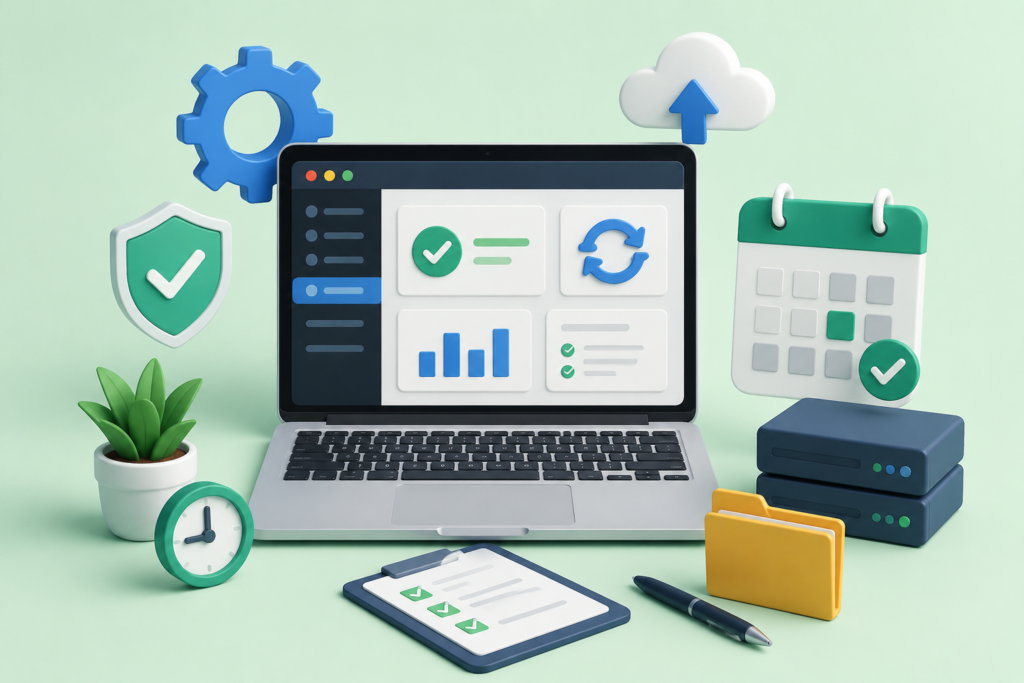
The most effective WordPress maintenance strategy is one that can actually be followed consistently. Start by creating an inventory of the website’s important components: WordPress version, active plugins, themes, custom code, hosting environment, database, integrations, administrator accounts, backup system, analytics, search tools, and critical user journeys. Identify which elements would cause the greatest business impact if they failed. This risk assessment allows maintenance priorities to be established logically rather than relying on a generic checklist. A lead-generation website, ecommerce store, membership platform, and publishing website may all require different maintenance priorities.
Next, establish a recurring workflow covering backup, updates, security, performance, SEO, monitoring, testing, and documentation. Before significant changes, confirm that recovery is possible. Apply updates in a controlled sequence where practical and verify the website afterward. Monitor important pages and functionality rather than checking only whether the homepage loads. Use official resources such as Google Search Central for current search guidance and the official WordPress documentation for WordPress technical information. When a problem occurs, record what changed, diagnose the root cause, apply the fix, and document the result. This gradually creates a repeatable operational system.
Long-term success comes from making maintenance routine instead of treating it as an emergency activity. Schedule regular reviews, assign responsibility, monitor important metrics, test recovery procedures, and periodically reassess whether the website’s infrastructure still matches its needs. A website should evolve as its traffic, content, integrations, security requirements, and business objectives change. The ultimate goal is not simply to keep WordPress updated. It is to maintain a secure, reliable, performant, accessible, search-friendly, and recoverable digital platform that continues to support its users and business objectives over time.
Conclusion
Effective WordPress maintenance is the foundation of long-term website reliability. Core updates, plugin and theme management, backups, security controls, database health, performance optimisation, SEO monitoring, error troubleshooting, infrastructure checks, accessibility reviews, and content maintenance all contribute to a stronger website. None of these activities should be considered in isolation. They work together as a continuous process designed to reduce preventable risks and improve the website’s ability to recover from unexpected problems.
For businesses relying on WordPress, proactive maintenance can protect both technical performance and the value of the website as a business asset. A disciplined approach makes changes more predictable, problems easier to diagnose, and recovery more manageable. It also creates a stronger foundation for future growth because the website is not continually carrying unresolved technical debt.
For businesses looking to keep their WordPress website secure, reliable, fast, and ready for ongoing growth, WP Maintenance Service provides the foundation for approaching maintenance as a structured and long-term responsibility rather than a last-minute repair exercise.
Want to Implement This Easily?
A successful maintenance strategy becomes much easier when it is translated into a practical workflow with defined tasks, tools, checks, testing procedures, and recovery steps. Use the following implementation prompt to turn the concepts covered throughout this guide into an actionable plan tailored to a real WordPress website.
Prompt Text:
“You are an expert consultant. Based on the blog post titled “(WordPress Maintenance)”, provide a step-by-step, practical implementation guide. Include tools, best practices, common mistakes to avoid, and advanced tips. Assume the reader wants to implement everything discussed in this article effectively.”
CTA: Want our help implementing this? Just reach out to us via our website contact form